
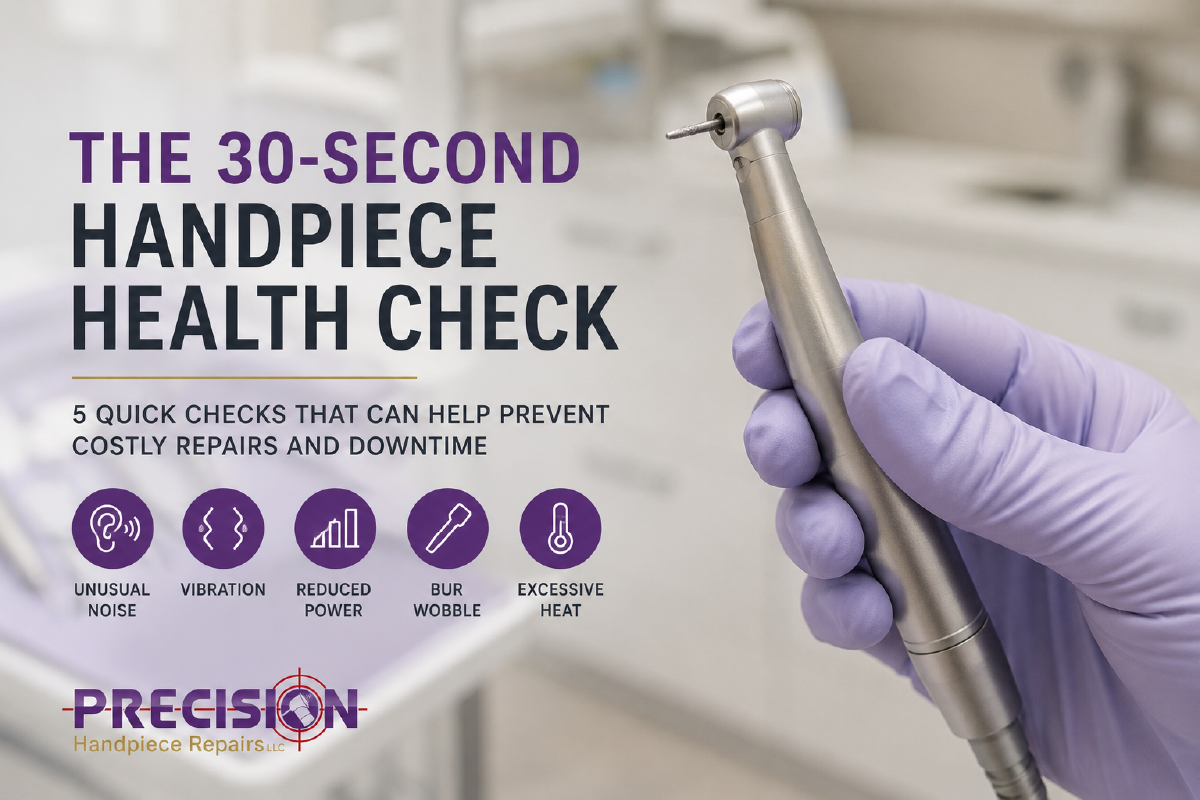
Five Quick Checks That Could Help Prevent Costly Repairs and Unexpected Downtime
Estimated Read Time: 5 minutes
Your Handpiece Is Talking—Are You Listening?
Your dental handpieces are among the hardest-working instruments in your practice. While they rarely fail without warning, the early signs of wear are often subtle and easy to overlook during a busy day.
Fortunately, you don’t need specialized equipment or technical training to spot many common issues.
In just 30 seconds, you can perform a quick visual and performance check that may help identify potential problems before they lead to unexpected downtime, costly repairs, or interrupted patient care.
Here are five simple things to look for before your day begins.
1. Listen for Unusual Noise
A healthy dental handpiece should operate smoothly and consistently.
If you notice grinding, whining, rattling, or a change in sound, it may indicate:
- Worn bearings
- Turbine wear
- Internal contamination
- Components nearing the end of their service life
While some changes happen gradually, unusual noise is often one of the earliest warning signs that a repair may be needed.
2. Feel for Excessive Vibration
Your handpiece should feel balanced and stable during use.
If you notice increased vibration, it could be caused by:
- Bearing wear
- Turbine imbalance
- Internal component damage
- Chuck wear
Ignoring vibration can eventually affect cutting precision and operator comfort.
3. Check the Power
Ask yourself:
Does your handpiece seem to cut as efficiently as it used to?
If procedures are taking longer or you find yourself applying more pressure than normal, reduced performance could indicate internal wear.
Addressing performance issues early can often help prevent more extensive repairs later.
4. Inspect the Bur
Before beginning your day, quickly examine the bur.
Look for:
- Wobble
- Poor retention
- Uneven spinning
- Difficulty inserting or removing the bur
These symptoms may point to chuck or turbine wear that should be inspected by a technician.
5. Watch the Temperature
A handpiece that becomes hotter than normal during operation deserves attention.
Excess heat may result from:
- Inadequate lubrication
- Worn bearings
- Internal friction
- Developing mechanical problems
Heat doesn’t always mean immediate failure—but it shouldn’t be ignored.
Why Catching Problems Early Matters
Many major repairs begin as relatively minor issues.
Scheduling service when symptoms first appear can often:
- Reduce repair costs
- Prevent unexpected downtime
- Extend the life of your handpieces
- Keep your practice running efficiently
A simple 30-second inspection each morning can help you identify concerns before they become bigger problems.
Need a Second Opinion?
If you’ve noticed any of these warning signs, our experienced technicians are here to help.
Every repair at Precision Handpiece Repairs includes a thorough inspection, quality replacement parts when needed, precision testing, and a commitment to getting your equipment back to peak performance.
Whether it’s a routine repair or a more complex issue, we’ll help you keep your practice moving.
Schedule Your Repair Today
Don’t wait for a small issue to become a major interruption.
Schedule your repair through our online client portal and let our team restore your handpieces to reliable, dependable performance.