
Electric Handpieces Are Growing. So Why Aren’t Air Turbines Going Away?
Electric handpieces have gained a lot of ground in dentistry.
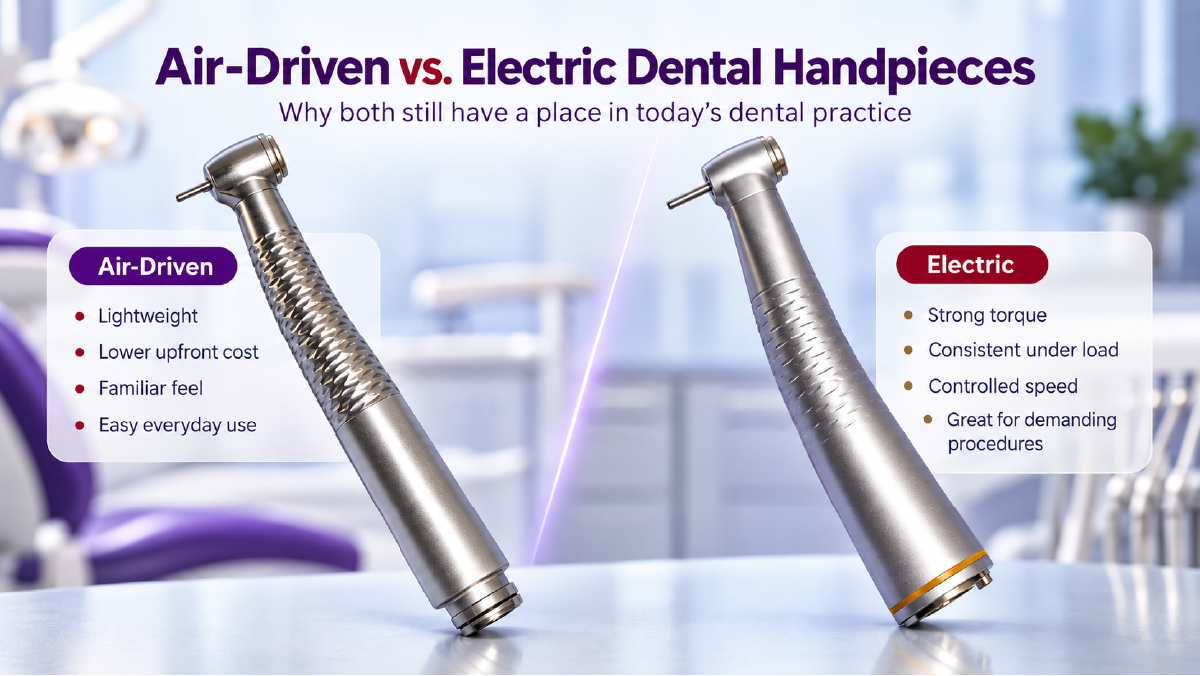
They offer strong, consistent torque, controlled speed, quieter operation, and a different cutting feel that many dentists prefer for restorative procedures.
Manufacturers continue investing heavily in electric systems, too. Companies like NSK and KaVo are actively promoting modern electric motors and attachments built around torque, ergonomics, visibility, and performance.
So it would be easy to assume air-driven high-speed handpieces are slowly becoming obsolete.
They aren’t.
In fact, many dental offices continue using air-driven handpieces every single day, and manufacturers are still actively supporting and developing them.
The more realistic future probably isn’t electric replacing air.
It’s dental practices using both.
Why Electric Handpieces Have Become So Popular
The biggest advantage of an electric handpiece is usually torque.
An air turbine may reach an extremely high free-running speed, but its speed can drop when resistance is placed on the bur.
Electric handpieces generally maintain their cutting power more consistently under load.
That difference becomes noticeable during procedures involving harder restorative materials, crown preparations, sectioning, or other situations where the handpiece is being asked to do more than light cutting.
Electric systems can also offer:
- More controlled operating speeds
- Lower-pitched sound
- Strong torque under load
- A smoother cutting feel
- Multiple attachments for different procedures
- Better integration with some modern delivery systems
NSK, for example, currently markets its NLZ electric micromotor system specifically as a way for users of air-driven handpieces to move into electric dentistry.
We recently took a deeper look at electric systems in our article, Choosing an Electric Dental Handpiece: 5 Features That Matter — and How to Protect Your Investment.
But electric has not made everything that came before it irrelevant.
Air-Driven Handpieces Still Have Some Big Advantages
Air turbines are familiar.
They’re lightweight.
They’re relatively simple.
And for many dentists, they simply feel right.
That matters more than specifications on a product sheet might suggest.
A dentist who has spent thousands of clinical hours using an air-driven handpiece develops a feel for how it responds under pressure, how much force to use, and how the bur behaves.
Air turbines also tend to be lighter than complete electric motor-and-attachment systems.
That can make a noticeable difference during a long clinical day.
And then there’s cost.
Moving into electric dentistry may require more than purchasing another handpiece. Depending on the setup, a practice may need a motor, control system, attachments, or modifications to existing delivery equipment.
An air turbine is often a much simpler purchase.
Manufacturers Haven’t Abandoned Air Either
If air-driven dentistry were truly on its way out, manufacturers probably wouldn’t still be investing in it.
But they are.
KaVo, for example, continues to promote both air-driven and electric handpiece systems in 2026.
That alone tells us something important.
These aren’t necessarily competing technologies where one eventually has to win.
They solve slightly different problems.
For one procedure or clinician, electric may be the better choice.
For another, air may make perfect sense.
There’s Also Something to Be Said for Simplicity
A traditional high-speed turbine has fewer layers between the dental unit and the bur.
That simplicity can be valuable when something eventually wears out.
High-speed turbines are also highly repairable in many cases.
At Precision Handpiece Repairs, we repair air-driven high-speed handpieces from a wide range of manufacturers.
Instead of automatically replacing an entire handpiece when the bearings wear out, a turbine may be able to be rebuilt with new bearings, O-rings, cleaning, lubrication, and testing.
That can make keeping quality air-driven equipment in service very cost-effective.
So Which One Is Better?
This is where the debate gets a little misleading.
There isn’t one answer for every practice.
Electric may make sense if you want:
- Stronger, more consistent torque
- Better performance under load
- Controlled speed
- Quieter operation
- Multiple attachment options
Air-driven may make sense if you prefer:
- Lighter weight
- Familiar handling
- Simpler equipment
- Lower upfront cost
- Straightforward repair options
And plenty of dental practices have found another answer:
Use both.
An electric handpiece can become the go-to option for procedures where torque matters most, while air-driven high-speeds remain available for everyday restorative work, backups, additional operatories, or simply because the dentist prefers them.
That flexibility can actually make more sense than trying to force the entire practice into one system.
The Better Question: Is Your Handpiece Doing Its Job?
Whether the handpiece is electric or air-driven, the most important thing is how it performs.
Pay attention when something changes.
New vibration, unusual noise, reduced cutting performance, overheating, poor bur retention, or a handpiece that suddenly feels different can all be reasons to have it inspected.
PHPR services high-speed, low-speed, electric, and surgical handpieces, so you don’t have to choose a repair company based on which technology your practice prefers.
And if you’re considering adding another handpiece or keeping a backup available, you can also browse new and refurbished dental handpieces in the PHPR online shop.
Electric Is Growing. Air Isn’t Dead.
Electric handpieces will almost certainly continue growing in dental practices.
The technology is good, the torque advantages are real, and manufacturers continue making the systems better.
But that doesn’t mean air-driven handpieces suddenly stopped being useful.
They’re lightweight, familiar, repairable, and still perfectly capable of handling a huge amount of everyday dentistry.
So instead of asking which technology will eventually replace the other, a better question might be:
Which handpiece makes the most sense for the job in front of you?
And if the one already in your hand isn’t performing the way it should, you can start a repair through the PHPR Client Portal and get it back into service.

